
By Lyla Latif (PhD)
Health is a Human Right. This is Non-Negotiable
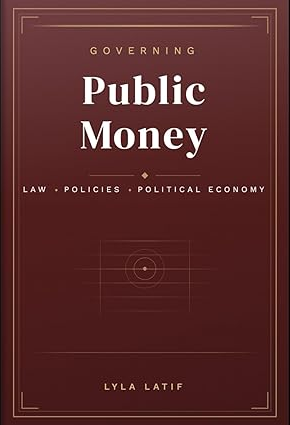
There is a quiet contradiction at the heart of the way we talk about health in Africa. We speak of universal health coverage, of dignity, of leaving no one behind, and yet the fiscal architecture that would make these promises real has been allowed to thin out year after year. In Kenya, public health spending comes to less than 3% of GDP. The Abuja Declaration of 2001, in which African states pledged 15% of national budgets to health, sits unfulfilled across most of the continent more than two decades later. This is the fiscal terrain onto which the proposed Framework Convention on Global Health (FCGH), championed by the FCGH Alliance, must now land. In my book “Governing Public Money”, I argued that public finance is not a neutral, technical matter. It is the most concrete expression of the political settlement between a state and its people. Where money is raised, how it is raised, who decides, and what it is spent on are questions of constitutional weight. They tell us who counts in the political community and who does not. A child who dies from a preventable illness in a poorly resourced county hospital is not the victim of an accident of nature. She is the casualty of a public finance system that did not value her life enough to tax for it, borrow for it, or budget for it.
This is why the proposed Framework Convention matters, and why it cannot succeed as a health instrument alone. The treaty rightly seeks to clarify the right to health, strengthen accountability, and secure equitable access. Yet its seventh principle, which calls for sufficient national and international resources for health, is where the entire architecture either holds or collapses. A right without revenue is a slogan. The treaty must therefore speak, with precision, to the discipline of domestic resource mobilisation and to the international tax cooperation that makes such mobilisation possible. The Kenyan case shows the stakes clearly. The Kenya Revenue Authority collected KES 2.571 trillion in the financial year 2024 to 2025, surpassing its target. This is a real administrative achievement. Yet the country’s tax-to-GDP ratio remains around 15%, well below the East African Community target of 25% by 2030 and below the level required to fund a serious health system. At the same time, debt service consumes a disproportionate share of ordinary revenue, leaving the social sectors to compete for what is left. When ministries fight over the residual, health rarely wins. It loses to security, to debt servicing, to infrastructure, and to the politics of patronage. The result is the dwindling allocation we now observe.
The Way Forward that the FCGH Provides
The treaty could intervene here by attaching binding fiscal floors to the right to health. It is not enough to repeat the Abuja figure. The Framework Convention should oblige parties to commit a defined minimum share of general government expenditure to health, to ring-fence that share from arbitrary reallocation, and to publish disaggregated budget execution data in formats that ordinary citizens, not only economists, can read. Transparency must be specified, not merely invoked. A budget that cannot be tracked cannot be defended. The harder question is where the additional revenue is to come from. In Kenya, as across much of the continent, the easy political answer has been to squeeze the formal sector, to raise consumption taxes, and to extend levies onto wages and small traders. The 2024 Finance Bill protests demonstrated the social limits of this approach. Citizens are not unwilling to pay tax. They are unwilling to pay tax into a fiscal black box from which little visible public good returns. Rebuilding that fiscal contract requires a different revenue base, and this is where the Framework Convention must connect to the parallel negotiations on the United Nations Framework Convention on International Tax Cooperation.
The illicit financial flows draining African economies, the aggressive tax planning of multinational enterprises, the undertaxation of high-net-worth individuals, and the proliferation of harmful fiscal incentives together represent the lost financing for health. Domestic resource mobilisation cannot be discussed honestly without naming these structural leakages. A clinic that lacks essential medicines in Kakamega (a county in Kenya) is connected, through the long chain of transfer mispricing and profit shifting, to a corporate balance sheet in a low-tax jurisdiction. The FCGH should therefore explicitly align with the UN tax convention in three respects. It should recognise revenue lost to illicit financial flows as revenue owed to the realisation of the right to health. It should require parties to publish beneficial ownership registries and country-by-country reporting in forms accessible to public scrutiny. And it should treat international tax cooperation as a component of the duty of international assistance under Article 2(1) of the International Covenant on Economic, Social and Cultural Rights.
International assistance itself needs sharper framing in the treaty. Development assistance for health is in retreat. The reversal of United States commitments to global health, the broader donor fatigue across the Global North, and the conditionalities attached to international financial institution lending have all narrowed the external financing space. If the Framework Convention treats international assistance as charity, it will fail. If it treats international assistance as obligation, grounded in the extraterritorial dimension of the right to health and in the historical responsibilities of wealthier states, it has a chance. The treaty should set targets for development assistance for health that are tied to gross national income, monitored by an independent body, and subject to peer review. It should also discipline the use of conditionalities that erode fiscal space, including the IMF programme requirements that have repeatedly compelled health budget compression across the continent.
Conclusion
The connection between domestic and international financing should therefore not be a footnote in the treaty’s design. A treaty that says states must spend more on health, without addressing why they cannot raise enough, will be a treaty for the well-resourced. The right to health requires fiscal sovereignty, and fiscal sovereignty in the current global economy requires international tax reform. There is one further point that the treaty must hold. Public money is not only a technical category. It is a moral one. In Governing Public Money, I traced how budget cycles in postcolonial African states became sites of contest between the state’s developmental ambitions and the inherited fiscal architectures that constrained them. The colonial revenue system extracted from agriculture and labour to finance settler infrastructure. The postcolonial system inherited the extractive logic without the political will to redirect it towards the population’s welfare. Health spending is one of the most visible places where this inheritance still operates. A binding global treaty on the right to health offers an opportunity to break that logic, but only if it speaks plainly to how money is raised, who pays, and what is owed. The FCGH Alliance’s principles are sound and the advocacy is necessary. What the treaty now needs is the courage to write fiscal obligations into the text with the same specificity that it writes health obligations. Without that, the right to health remains a beautifully drafted aspiration. With it, the right to health becomes a budget line, a tax base, and ultimately a clinic that has medicine on its shelves.
